What’s Blooming

Blooming in My Yard: March 29-April 4, 2014

Blooming in my yard. TheGardenMaide_copyright_2014_RStafne-011_WEB

Blooming in my yard. TheGardenMaiden_copyright_2014_RStafne-011_WEB

Friday, March 28, we received our first big spring rain and with some sunshine and warm temperatures, seedlings, new leaves and color are exploding all around.
Blooming in my yard. TheGardenMaide_copyright_2014_RStafne-011_WEB

Blooming in my yard. TheGardenMaiden_copyright_2014_RStafne-011_WEB

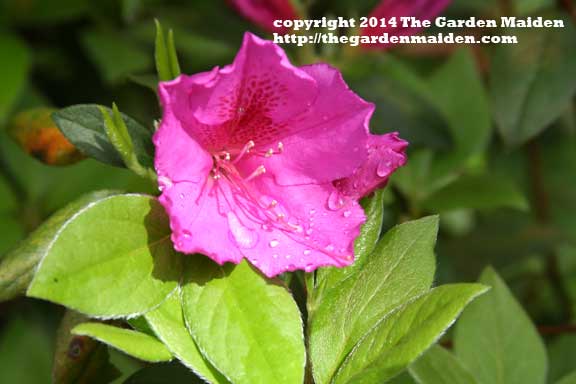
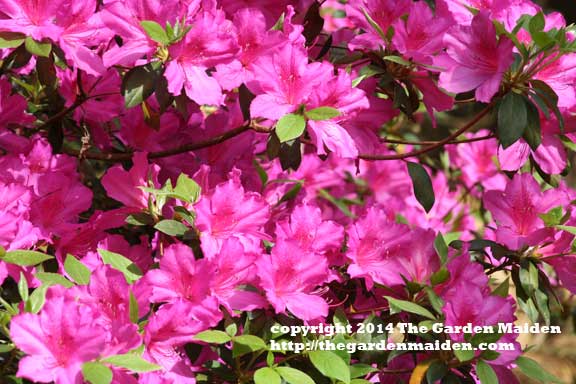
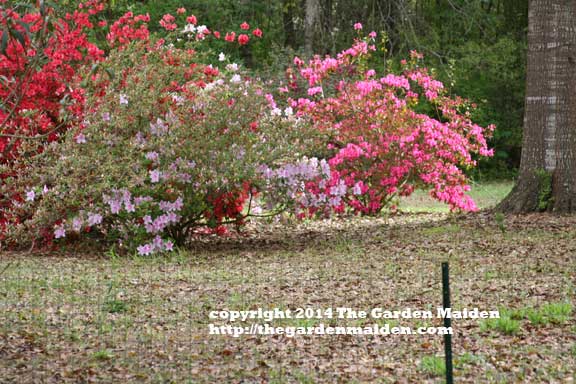
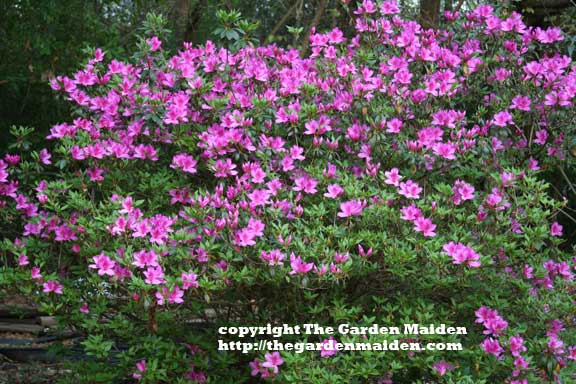
The main eye-catcher in my garden this past week are definitely the Rhododendrons! I have so many different colors. Having many existing Rhodies was one reason for choosing my home. This classic standard for any southern garden provides a spring festival of color for several weeks.
Blooming in my yard. TheGardenMaide_copyright_2014_RStafne-011_WEB

Blooming in my yard. TheGardenMaiden_copyright_2014_RStafne-011_WEB

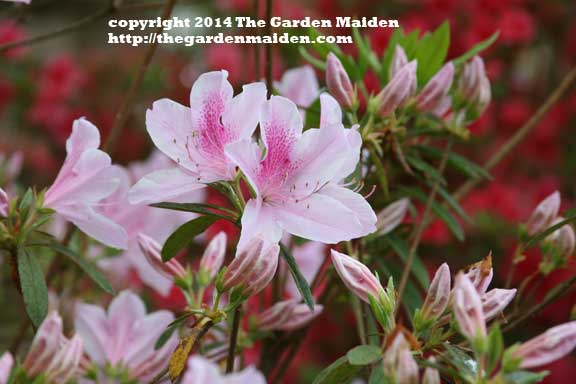
By the end of the week they were really peaking. As I mentioned in an earlier post, all azaleas are in the genus Rhododedron. Classification can be confusing, but according to one of the leading professional horticulturists, Dr. Michael Dirr, in general, true rhododendrons are usually evergreen and azaleas are mostly deciduous.  Rhododendrons usually have ten or more stamens (male parts). Azaleas usually have five stamens, flowers tend to be funnel or tubular and generally have leaves that are pubescent and never dotted with scales. In my own yard I believe I mostly do have evergreen “rhodies”, nearly all of the large flowers have ten stamens. I’ve got deciduous rhododendrons too. Look at the yellow azalea pictured down below on the page. It is a native azalea and you may be able to see it has the classic funnel-form flower and five stamens. That’s an easy one!
Blooming in my yard. TheGardenMaiden_copyright_2014_RStafne-011_WEB

Blooming in my yard. TheGardenMaiden_copyright_2014_RStafne-011_WEB

If you are interested in all things Rhododendron, you might check out the American Rhododendron Society. There are also State chapters.
 

Blooming in my yard. TheGardenMaide_copyright_2014_RStafne-011_WEB

Blooming in my yard. TheGardenMaiden_copyright_2014_RStafne-011_WEB

I am also excited that my native azalea is still alive and bloomed very well this spring after one year in the ground. Rhodendron austrinum (flame azalea) is a hardy, native, deciduous shrub with outstanding spring color. I highly recommend seeking out both R. austrinum or R. canescens native azaleas for your southern garden, where hardy.
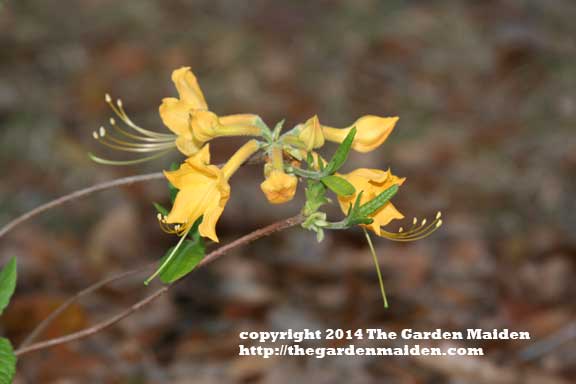
Native azalea blooming in my yard. TheGardenMaide_copyright_2014_RStafne-011_WEB

Native azalea blooming in my yard. TheGardenMaiden_copyright_2014_RStafne-011_WEB

Azaleas weren’t the only things blooming though! My red-tipped Photinia started flowering. There are several species of Photinia. Mine are planted as hedges, which does pose some problems, but for now, still serve their purpose. Clemson University has a good Cooperative Extension handout with information on Phontinia.
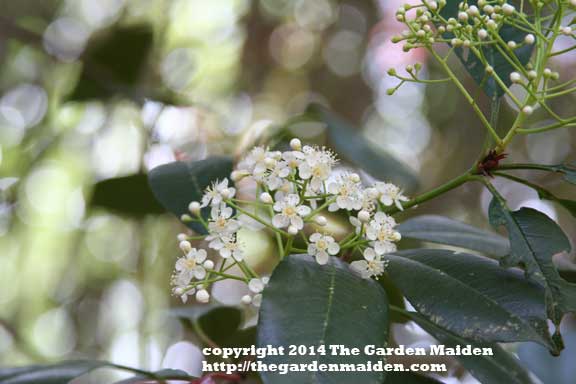
Blooming in my yard. TheGardenMaide_copyright_2014_RStafne-011_WEB

Blooming in my yard. TheGardenMaide_copyright_2014_RStafne-011_WEB


The tiny “daisy-looking” flower below is a native wildflower of the genus Erigeron. Color in the ray flowers varies from white to white with lavender. Once flowering begins to decline I will mow these back to the lawn height. There are at least seven species that bloom in this region in spring.
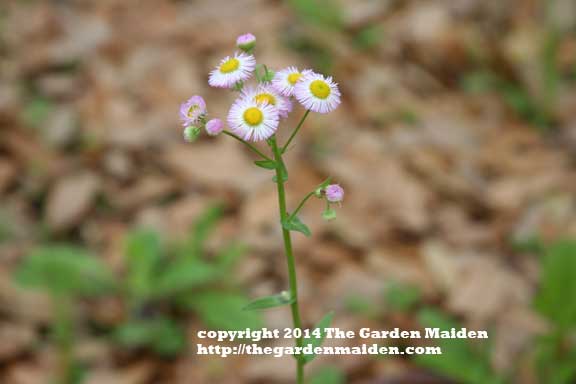
Blooming in my yard. TheGardenMaide_copyright_2014_RStafne-011_WEB

Blooming in my yard. TheGardenMaide_copyright_2014_RStafne-011_WEB

A standard, “old timey” spring, flowering shrub is old-fashioned spirea, usually called bridal wreath spirea, Spirea vanhouttei. Its a graceful, deciduous, arching shrub with clusters of brilliant, white, tiny flowers.
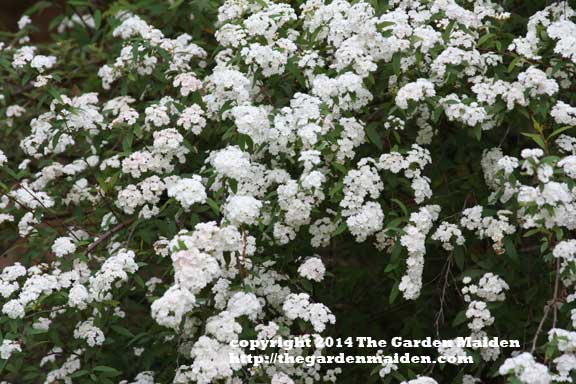
Blooming in my yard. TheGardenMaide_copyright_2014_RStafne-011_WEB

Blooming in my yard. TheGardenMaide_copyright_2014_RStafne-011_WEB

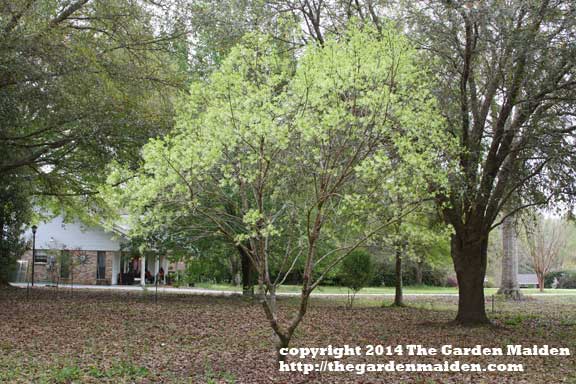
I’m cheating with this next small, flowering deciduous tree as its not fully flowered out, but so close that I could not resist. In the late afternoon sun the flowers of Chionanthus virginicus seem to glow and the chartreuse, spring leaves set the perfect background for the thin, spidery-like flowers. Commonly known as fringe tree or Grancy graybeard, you may see this fine native flowering along roadsides or hiking trails of native plant habitat.  I love to observe this tree from my second-story window in the late afternoon when it really seems to glow.
Blooming in my yard. TheGardenMaide_copyright_2014_RStafne-011_WEB

Blooming in my yard. TheGardenMaide_copyright_2014_RStafne-011_WEB

If my springs posts don’t inspire you to get out and observe what’s blooming in your own yard,  I hope that you can visit nearby parks or gardens to enjoy all that Mother Nature has to offer us in spring 2014.

Keep on Growin’
The Garden Maiden

All images and text copyright 2014 The Garden Maiden


Categories: Observations from My Garden of Goods & Evils, What's Blooming | Tags: , , , , , , , , | Leave a comment

Bogue Chitto State Park, LA: plants in bloom March 2014

TheGardenMaiden_copyright_2014_BogueChittoStatePark_RStafne-023_WEB

TheGardenMaiden_copyright_2014_BogueChittoStatePark_RStafne-023_WEB

Bogue Chitto State Park is located in Franklinton, Louisiana (about 35 minutes north of Abita Springs, LA). I recently traveled there for a hike with my husband and two dogs. What a wonderful surprise! I am only sorry we did not know about this state park sooner. As pictured above, there was tremendous spring color to be found, including Gelsemium sempervirens, Prunus serotina, and native maple (Acer species).

Below are many images I captured during our hike, which wasn’t the ideal time for photography, but photography wasn’t the reason for our visit. I would love to elaborate more on each plant, but working with the images, researching the plants, and putting it all together has maxed out my daily limit. Where in doubt of the species, I have only indicated the Genus.


TheGardenMaiden_copyright_2014

Malus species in flower. TheGardenMaiden_copyright_2014

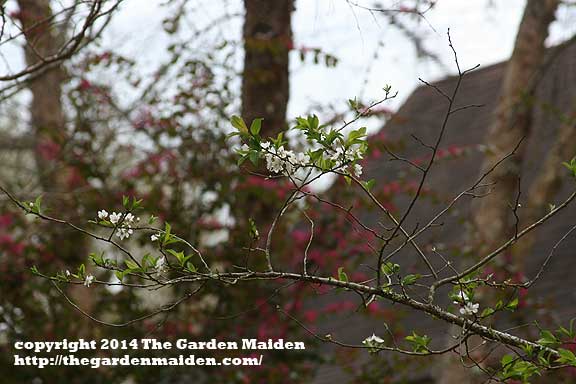
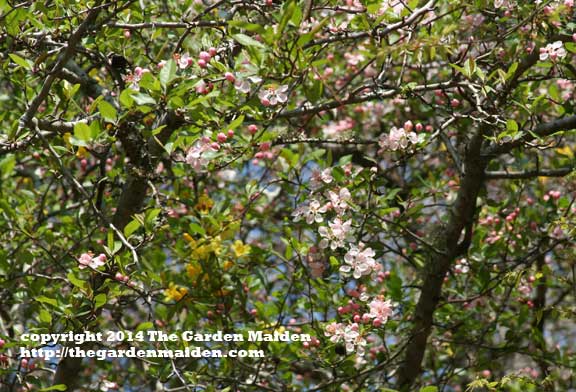
The image above is likely a crabapple. Note the pale pink blossoms, indicative of the Malus genus. Below is what looks like a wild apple. Its a rather old, shaded tree, but the flowers were all white and very beautiful in the afternoon sun.

Malus species. TheGardenMaiden_copyright_2014

Malus species. TheGardenMaiden_copyright_2014

Parsley hawthorn. TheGardenMaiden_copyright_2014

Parsley hawthorn. TheGardenMaiden_copyright_2014

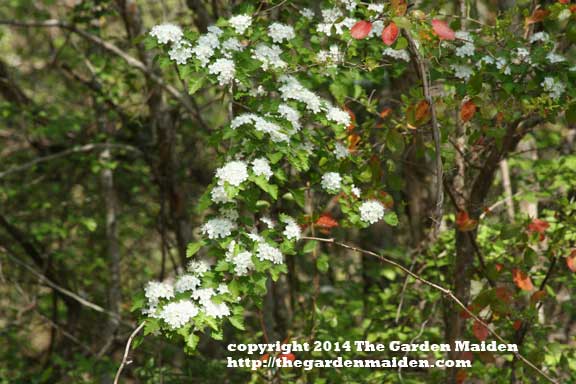
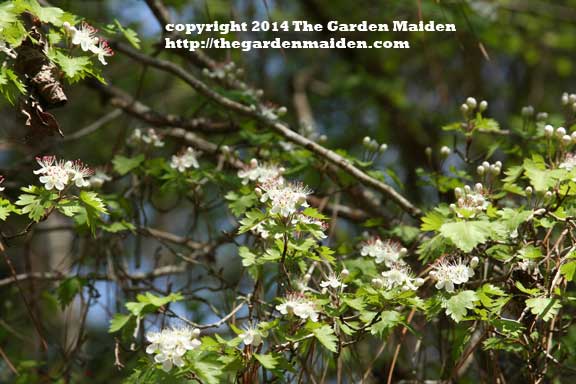
The images here (above and below) are small trees/large shrubs in the Crataegus genus. My first thought was definitely parsley hawthorn, an outstanding native. In the first image, the flowers seem to be more white, whereas in the lower image, the tree seemed to have very dominate pink anthers (pollen part). It could have been lighting I suppose, but it gave off a different feel. (don’t forget, you can double click each image to see the larger size as these are “medium”)

TheGardenMaiden_copyright_2014

TheGardenMaiden_copyright_2014

Below is a Trillium! One of spring’s sweet surprises. Keep your eyes peeled on the ground for this low growing and somewhat shy native.

Trillium. TheGardenMaiden_copyright_2014

Trillium. TheGardenMaiden_copyright_2014

The Illicium at this state park were incredible. Hurry and get up there now to see the glorious blooms. I had never seen so many Illicium floridanum in one area, and certainly not blooming!  While quite showy, their smell was somewhat along the lines of a dirty fish aquarium.  But you did have to get close to smell it. I had a variegated variety of this native growing in my yard, but it did not survive the year after planting.  I would like to try again.

Illicium floridanum. TheGardenMaiden_copyright_2014

Illicium floridanum. TheGardenMaiden_copyright_2014

In a recent post about what’s blooming in my yard, I included a note about Vaccinium elliottii, Elliott’s blueberry. There were several plants still blooming along the trails at Bogue Chitto.

Vaccinium elliottii. TheGardenMaiden_copyright_2014

Vaccinium elliottii. TheGardenMaiden_copyright_2014

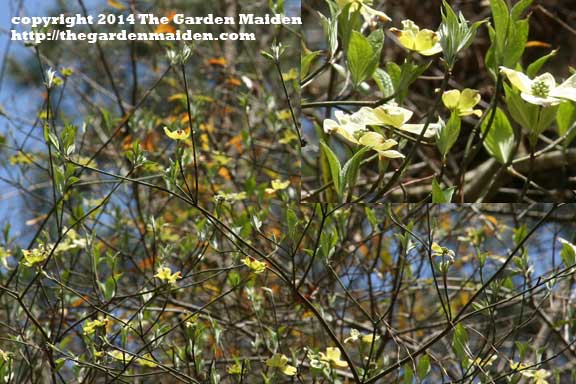
I could not have been more surprised to find a flowering dogwood along the trails. Some of the trails lead you up hills with overlooks of the ravines below. This higher level of well-drained soil provided the perfect niche for a dogwood. This tree was relatively old and the flowers were about twenty feet high into the canopy. They were not white, but a creamy light yellow.

Cornus florida. TheGardenMaiden_copyright_2014

Cornus florida. TheGardenMaiden_copyright_2014

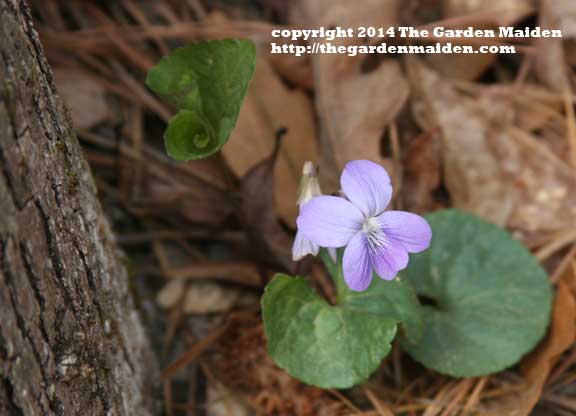
I spotted a couple of little violets, some that were white tinged with purple and this lovely lavender colored specimen below.

Viola. TheGardenMaiden_copyright

Viola. TheGardenMaiden_copyright-2014

Often seen popping up in lawns, species of the genus Hedyotis could be found along the trails in sunnier locations.

Hedyotis. TheGardenMaiden_copyright

Hedyotis. TheGardenMaiden_copyright_2014

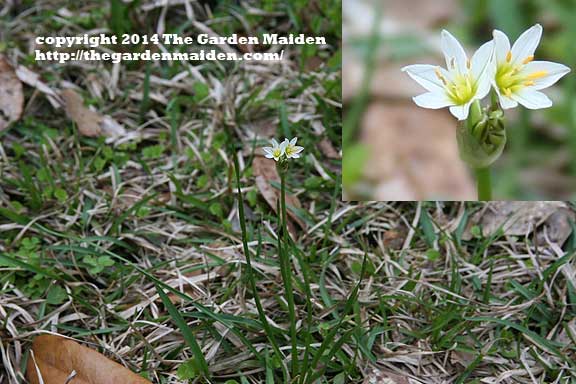
Last week I photographed Nothoscordum in my own yard and have since found huge swaths of it blooming in unmowed roadsides. The image below was a specimen along the trails we hiked.

Nothoscordum bivalve. False garlic. TheGardenMaiden_copyright

Nothoscordum bivalve. False garlic. TheGardenMaiden_copyright_2014

Certainly I was impressed with all the native blooming plants at Bogue Chitto, including several Halesia, I believe H. diptera. Similar to the flowers of Elliott’s blueberry, Halesia diptera have cute little bell-like flowers that hang daintily from their slender stems.

Halesia diptera. Silverbell.  TheGardenMaiden_copyright

Halesia diptera. Silverbell. TheGardenMaiden_copyright_2014

Its always fun to identify a plant that you never remember seeing or learning before. Such was the case with the small tree below: Symplocos tinctoria (common sweet leaf)! Getting up close and personal with the flowers was a special treat.

Symplocos tinctoria. TheGardenMaiden_copyright

Symplocos tinctoria. TheGardenMaiden_copyright_2014

The genus Senecio is large and at the moment I don’t have time to key out the two yellow-orange spring wildflowers. They are members of the family Asteraceae and as best as I can tell, are both in the genus Senecio. They were blooming side by side along the shadier areas of the trail, particularly the lower, wetter areas.

Asteraceae family. Either Senecio a.k.a. Packera genus. TheGardenMaiden_copyright_2014

Asteraceae family. Either Senecio a.k.a. Packera genus. TheGardenMaiden_copyright_2014

Asteraceae family. Either Senecio a.k.a. Packera genus. TheGardenMaiden_copyright_2014

Asteraceae family. Either Senecio a.k.a. Packera genus. TheGardenMaiden_copyright_2014


You can find a great resource from Louisiana State University Ag Center in their Native Tree Guide.

The bathrooms were clean, stocked, and plentiful. Our dogs had a great time hiking the trails with us and we can’t wait to go back. There were hills to climb, streams, lakes and a river to to explore. Many folks were camping, running trails, hiking, biking, fishing  and walking with families and friends.  It was a very safe and well-maintained park. Kudos to LA State Parks!


Exit sign at Bogue Chitto State Park. TheGardenMaiden_copyright_2014_BogueChittoStatePark_RStafne-360_WEB

Exit sign at Bogue Chitto State Park. TheGardenMaiden_copyright_2014

We recommend ending a day of hiking with some tasty, fresh, local microbrews and grub at the Abita Brew Pub in Abita Springs. Their patio is also leashed-dog friendly!

Keep on Growin’
The Garden Maiden

All images and text copyright 2014 The Garden Maiden
Categories: National & State Parks, What's Blooming | Tags: , , , , , , , , , , , , , , , , , , , , , , , , | Leave a comment

Blooming in My Yard: March 15-21, 2014

What's Blooming in My Yard. TheGardenMaiden_copyright_2014_RStafne-109_WEB

What’s Blooming in My Yard. TheGardenMaiden_copyright_2014_RStafne-109_WEB

This week I have seven flowers to share with you from what is blooming in my Mississippi yard.  The first is the image above of the iris growing at the base of an oak tree. I was so excited to see them open on Thursday. They have a very soft fragrance and really thrive at the base of the tree.  These iris were already growing there when I moved to the house. I have no idea which variety, but to me it doesn’t matter as much as just having them here as I left about seven different varieties of iris at my previous home in Oklahoma, most of which it seems were destroyed by the new homeowners, I was sad to see.

What's Blooming in My Yard. TheGardenMaiden_copyright_2014_RStafne-109_WEB

What’s Blooming in My Yard. TheGardenMaiden_copyright_2014_RStafne-109_WEB

The second image  is a very old apple tree, with just a small bit of life left in its tired old bones.  I cannot bring myself to cut it down, but I have planted a fig near the base with the hopes that it will be able to take over and replace the apple tree when it finally gives up the ghost. Its always good to plant for the future.

What's Blooming in My Yard. TheGardenMaiden_copyright_2014_RStafne-109_WEB

What’s Blooming in My Yard. TheGardenMaiden_copyright_2014_RStafne-109_WEB

A member of the Rosaceae family just like the apple tree above, these dewberries are flowering prolifically around my yard (sometimes to my dismay) and along roadsides throughout the region.  One can often find members of the same plant family blooming at the same time.  Dewberries produce edible fruit if you can get them before the birds or other animals. Growing along the ground, they make for easy pickens. Dewberries, Rubus trivialis, are native plants. Read more about dewberries on Wildflower.org.

What's Blooming in My Yard. TheGardenMaiden_copyright_2014_RStafne-109_WEB

What’s Blooming in My Yard. TheGardenMaiden_copyright_2014_RStafne-109_WEB

Dianthus, pinks, are beginning to flower. This winter they only rested from flowering for about six weeks, though the past two winters, they produced a bloom or two all winter. Growing in a half-whiskey barrel, these hardy gems are easy to grow and trouble-free. I deadhead them throughout the year to keep them flowering. The only trouble I have had with this planting were fireants that made their home in the pot. I have treated them successfully with fireant powder once per year. Fireants and poison ivy…two garden pests I despise and treat.

What's Blooming in My Yard. TheGardenMaiden_copyright_2014_RStafne-109_WEB

What’s Blooming in My Yard. TheGardenMaiden_copyright_2014_RStafne-109_WEB

The following three plants are natives that you may be missing in your lawn or garden if you apply herbicides and/or grow a monocultured lawn. The image above is known as lyreleaf sage or cancer weed, a member of the Lamiaceae family (mint, henbit and dead nettle family), one of my favorites for spring. Grab your hand lens and observe the tiny flowers closely. The family for these plants is also referred to sometimes as labiate due to the flower structure (2-lipped). They are magnificent and typical of the family. A native perennial, Salvia lyrata, makes a nice groundcover! Are you familiar with the groundcover called ajuga? Well, this has a very similar growth habit because they are in the same family! Wildflower.org reports this to be a good plant for butterflies and hummingbirds. As with most members of the mint family, there are many herbal medicinal references for Salvia lyrata if you search the web.

What's Blooming in My Yard. TheGardenMaiden_copyright_2014_RStafne-109_WEB

What’s Blooming in My Yard. TheGardenMaiden_copyright_2014_RStafne-109_WEB

Why I am nearly positive the plant above is Erigeron quercifolius (oakleaf fleabane), I can tell you for certain it is a member of the Asteraceae family. The leaf shape is distinctive which is why I believe it to be E. quercifiolius, and not one of the other Mississippi native Erigeron species. This plant grows in partial shade near the plant above, close to a sidewalk. After flowering I will go ahead and mow them down. Wildflower.org reports this plant to be a host for beneficial insects.  Another good reason NOT to spray herbicides on your lawn to create some fakey “perfect” portrait of what someone has told you a lawn should look like.

What's Blooming in My Yard. TheGardenMaiden_copyright_2014_RStafne-109_WEB

What’s Blooming in My Yard. TheGardenMaiden_copyright_2014_RStafne-109_WEB

My final flower for the week is a member of the Liliaceae family (a monocot).  Pictured above, Nothoscordum bivalve (as known as Allium bivalve) is commonly known as false garlic or crow poison. This dainty, perennial bulb can be found popping up in lawns or along roadsides. It is a native plant for Mississippi. I mow around these little guys until they are finished flowering.

When keying out plants, having a great resource is invaluable. Although I have not yet found a printed key for Mississippi, I can usually get to the “family” using my KEYS TO THE FLORA OF ARKANSAS. This book was written by one of my professors at the University of Arkansas, Dr. Edwin B. Smith. Additional resources for Mississippi native or wildflower identification can be found on USWildflowers.com (or your state).

If you happen to find an error in plant identification, let me know. I do try to verify all plants and plant names with at least three sources, but mistakes happen.  I love to learn if you know something I’ve missed.

Another day of planting awaits! I put together a few more raised beds yesterday and need to get them planted today. Rain comin’ on Sunday! Happy SPRING ya’ll!

Keep on Growin’
The Garden Maiden

All images and text copyright 2014 The Garden Maiden

Categories: What's Blooming | Tags: , , , , , , , , , , , , , , | 1 Comment
Pollinator Gardens.org

Enhancing pollinator habitat through research, education and design

Keep Mississippi Beautiful

Working to inspire and educate Mississippians to take action everyday to impact, improve, and beautify their community environment.

Fire Gardens: fire-generated grassland seed

Louisiana Cajun Prairie and Pine savanna seed

Easy Wildflowers

Wild flowers from The Forest of Dean

Always Growing

A garden is good for both body and soul

In the Garden with Arkansas Extension Horticulture

Welcome to In the Garden with Arkansas Extension Horticulture, a blog about gardening in Arkansas.